
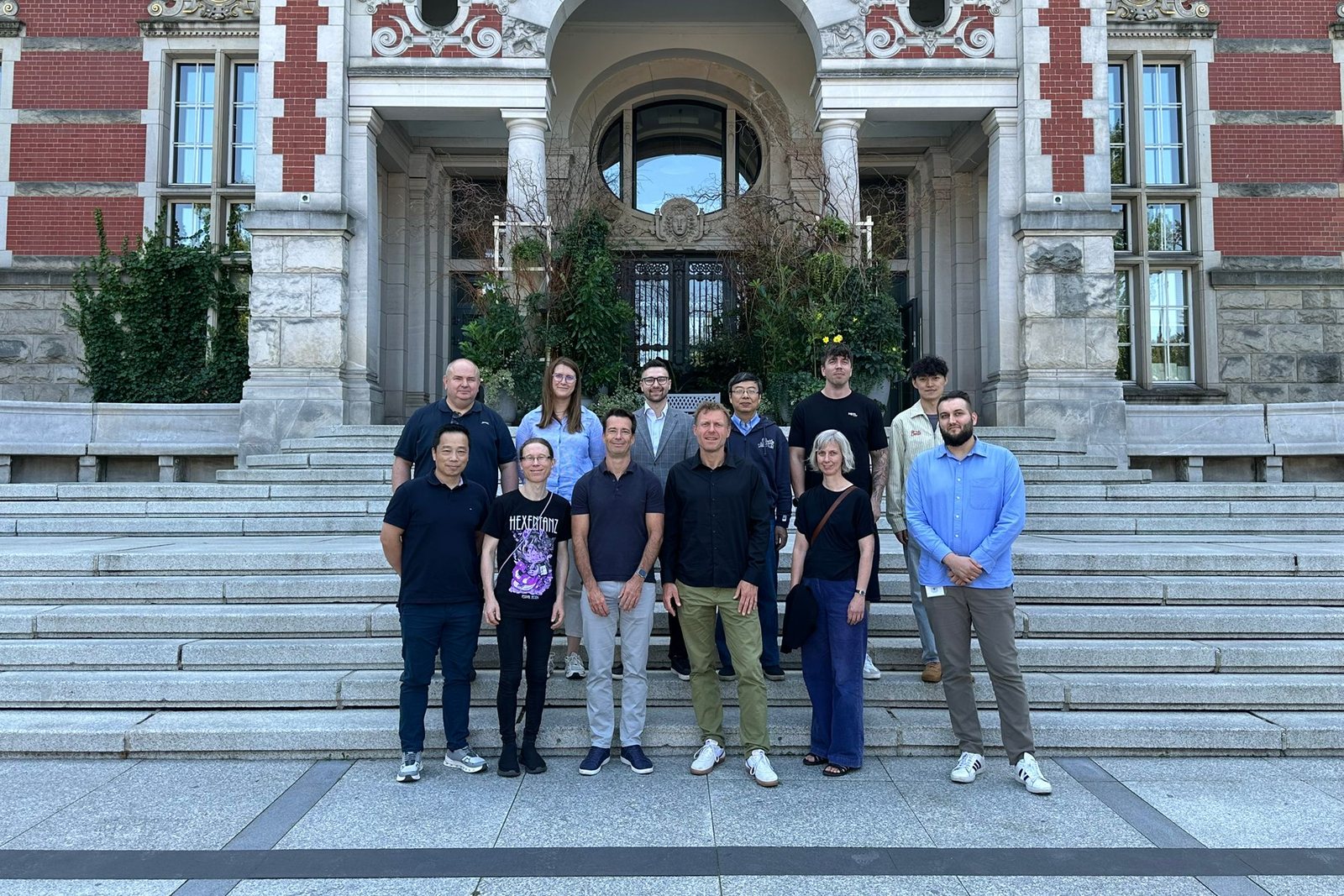
The consortium met in Gdańsk on 26–27 August 2026, hosted by Gdańsk University of Technology. It was the first full in-person meeting since the kick-off and came nine months into the project.
Progress across the work packages
Partners presented results from all technical work packages: degradation testing of state-of-the-art cells, corrosion behaviour of candidate 430-grade steels, development of the protective coating and the first coated components, stack manufacturing and materials compatibility, and the first stack test data relevant to AC:DC operation. Work package 6 also reviewed dissemination and stakeholder engagement, including the launch of this website.
Steering Committee
The Steering Committee met on 27 August. It reviewed the overall status of the project against the plan, the budget at consortium, partner and work package level, and — a standing item — whether the project and its objectives are still the right ones given how the hydrogen sector has moved since the proposal was written. The Committee also set the date of the next meeting.
What comes next
The coming period brings the first public deliverable with technical content: D2.2, the report on degradation behaviour and mechanisms of state-of-the-art SOEC cells, due in November 2026. Work on the improved cells and the second generation of coated interconnects runs in parallel. Deliverables marked public in the project plan will be posted on the Results page as they are approved.
CHARGE (CETP-2024-00202) is funded through the CETPartnership Joint Call 2024, with support from EUDP (Denmark), NCBR (Poland) and PtJ on behalf of BMWE (Germany).