
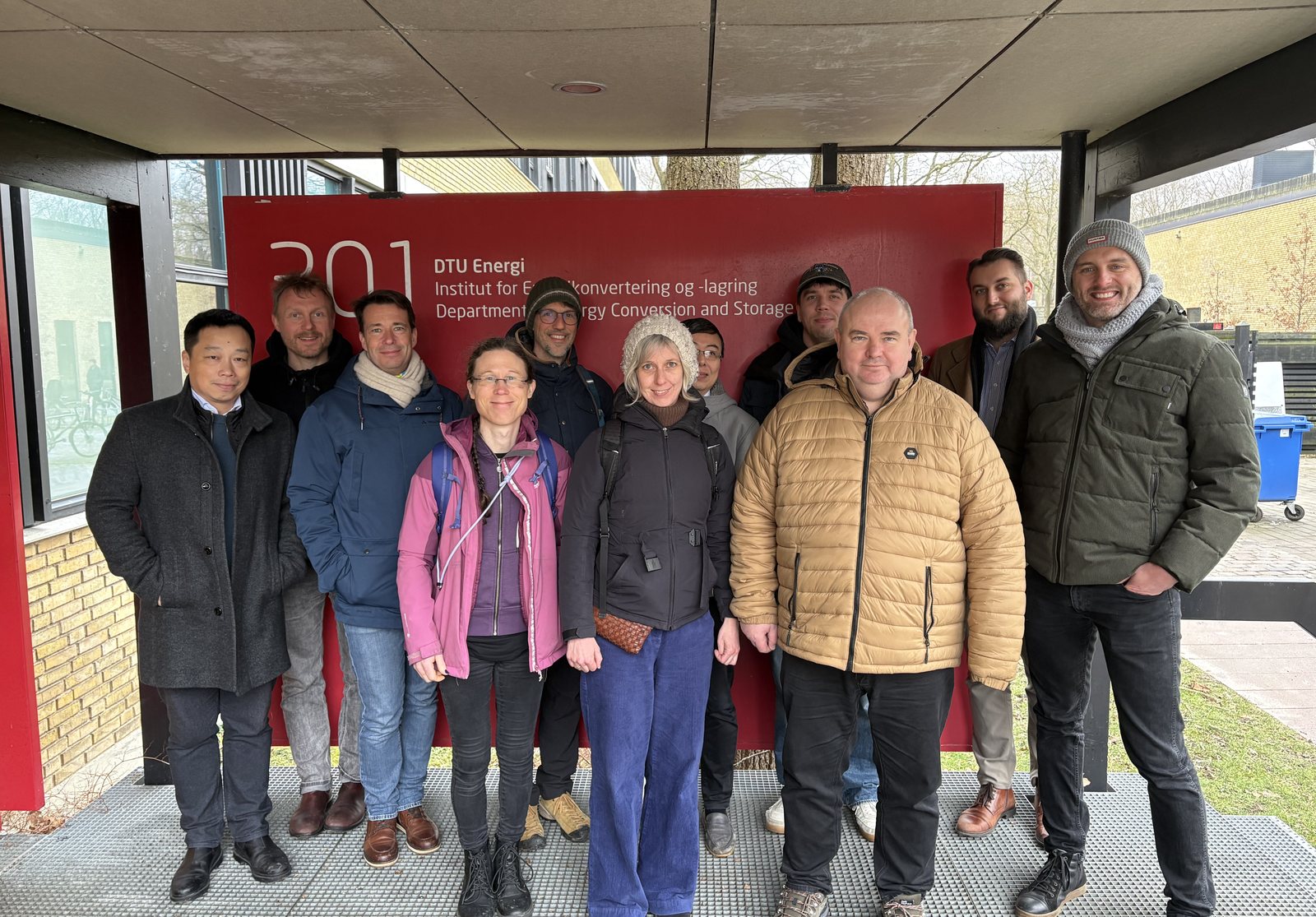
The CHARGE consortium held its kick-off meeting on 20–21 January 2026, hosted by DTU Energy at the Technical University of Denmark in Kongens Lyngby, north of Copenhagen. All six partners were represented.
What was covered
Each of the seven work packages presented its plan for the first year: the state-of-the-art cell and stack baselines against which everything else will be measured, the corrosion and impurity test matrix, the coating development route, the stack build schedule, and the AC:DC test campaign. The consortium also agreed the practical machinery that a project of this kind runs on — reporting lines, the internal review process for publications, and how research data will be handled.
The first deliveries were scheduled from this meeting: state-of-the-art cells from DTU and the first industrial stack from VERMES, both of which feed the benchmark tests that the rest of the project is compared against.
Why it matters
The kick-off set the sequence that makes CHARGE work as one project rather than six parallel ones. Cells developed in Denmark, interconnects coated in Poland and stacks assembled in Germany have to meet the same specifications and arrive in the right order; the AC:DC operating strategy can only be judged on stacks that are otherwise identical to the benchmark.
CHARGE (CETP-2024-00202) is funded through the CETPartnership Joint Call 2024, with support from EUDP (Denmark), NCBR (Poland) and PtJ on behalf of BMWE (Germany).